

Can you find who is the villain in our story?
WHY TICKS?
Ticks are small, but their impact is growing.
As the climate in Europe warms and environments change, ticks (like mosquitoes) are expanding into new areas and extending their activity seasons. Some species can transmit diseases to humans and animals, making early awareness and prevention very important.

Who is involved in the story?
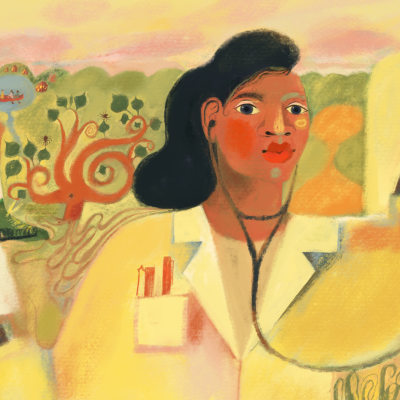
Healthcare workers are taking action on tick bites.
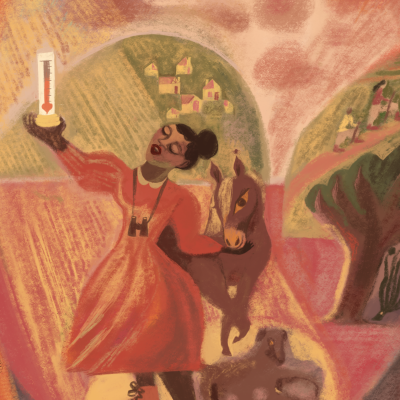
The ecosystem stage upon which the story of the tick unfolds.
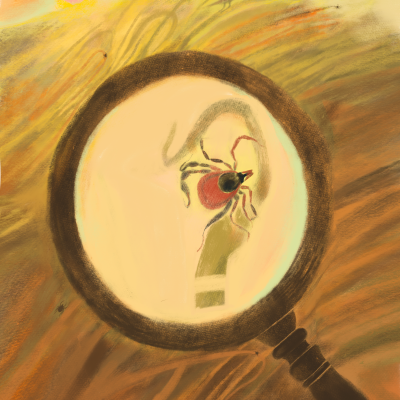
Is the tick the villain of this complicated story?
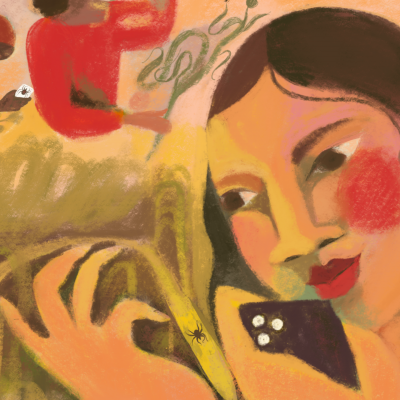
The citizen scientists weave the web of community tick awareness.
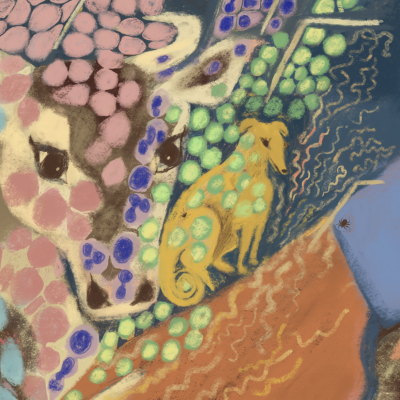
The most mysterious and microscopic side of the story.
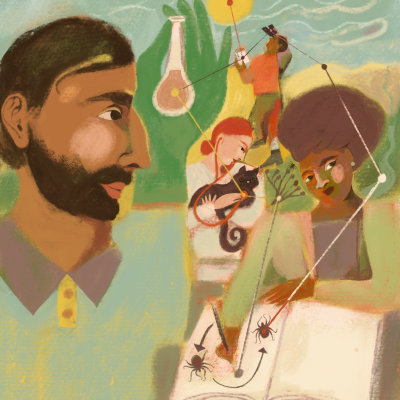
The many scientists solving the puzzle of the tick.
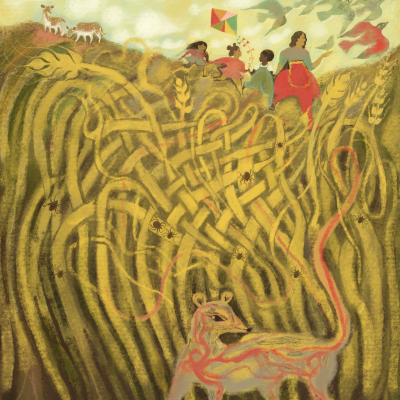
The people, pets, livestock, and wildlife supporting and transporting ticks.
What does a tick look like?
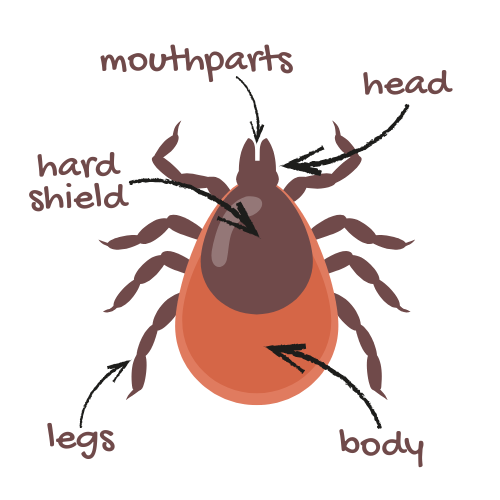
What to look for
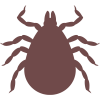
Head: A small front section containing the mouthparts. This is the part that attaches to skin when a tick bites. It includes the “barbed” structure (the hypostome) that allows the tick to stay anchored.
Body: A rounded, oval body that varies in size from a poppy seed (in young ticks) to a small grape (in fully fed adults). Unfed ticks are flat, teardrop-shaped, brown or reddish, while engorged ticks are greyish, swollen, and smooth.
Legs: Adult ticks have eight legs, grouped close to the front of the body. This is one of the easiest ways to distinguish ticks from insects (which have six legs).
How can you help?
Become a citizen scientist!
Help us monitor tick species and access health information in the case of a tick bite on these available national apps.
About the campaign
AN ART–SCIENCE CAMPAIGN RAISING AWARENESS ABOUT TICKS, CLIMATE CHANGE, AND CITIZEN SCIENCE.
Time is Ticking combines visual art with climate and health science to help people understand how ticks affect the health of humans and animals, and how climate change is expanding tick habitats across Europe.
Through creative posters placed in public spaces, the campaign invites people to learn, reflect, and take action.
This campaign has been prepared by The Red Cross Climate Centre, with the support of Three o’clock, and all partners in the IDAlert consortium.

About the IDAlert project
IDAlert is a European research project involving 19 partners dedicated to tackling the increasing spread of vector-borne diseases driven by climate change. Its primary goal is to build a more resilient Europe by developing smart, cost-effective prevention strategies. IDAlert is creating novel indicators to accurately track disease risk across three factors: the danger (pathogen threat), exposure (who is affected), and vulnerability (community susceptibility), while specifically examining how this risk affects different socio-economic groups. Additionally, the project is generating tools to assess the cost-benefit of climate action and developing early warning systems to strengthen local health systems. By uniting experts and engaging European authorities, IDAlert ensures its evidence and tools directly enhance the population’s health resilience to climate change impacts.
A key objective of IDAlert is to enhance preparedness for new tick-borne infections. To address this, the project’s partner, the Swedish Veterinary Agency (SVA), launched the Report Tick web tool. This citizen science initiative allows the public to monitor ticks, providing crucial early warning signals. If a new tick species is reported, it signals a potential risk of introducing new infectious agents. For example, using this tool, the tick species Dermacentor marginatus was discovered for the first time in Sweden, demonstrating the tool’s effectiveness in monitoring range expansion and identifying potential new health threats.



Our latest news